
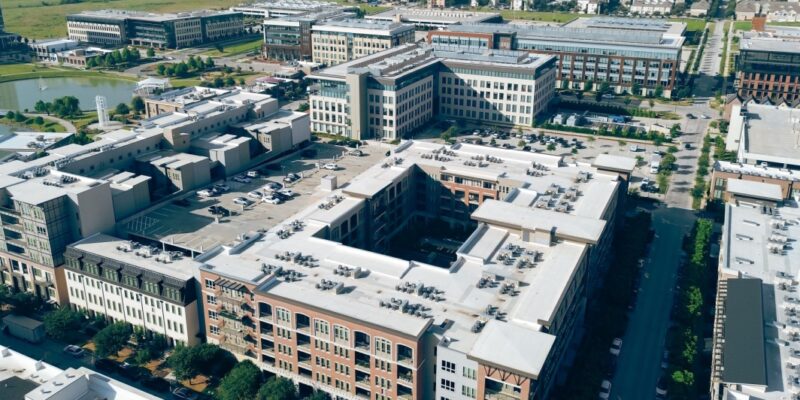
In today’s fast-paced world, seamless communication across sprawling campuses has become a necessity. Whether it’s a healthcare system with multiple buildings, a corporate headquarters with separate departments, or an educational institution spread out across a large property, wireless connectivity plays a crucial role in keeping operations running smoothly. The challenge, however, lies in establishing reliable and unified communication systems across these multi-building environments. Fortunately, advancements in wireless communication technology now make it possible to connect entire campuses with minimal infrastructure disruptions and maximum efficiency.
The Complexity of Multi-Building Campuses
Multi-building campuses pose unique communication challenges. Walls, distances, and structural differences between buildings can all interfere with signal transmission. Traditional communication solutions like landlines or cellular service are often inadequate due to coverage gaps or delays in connectivity. In emergencies, these issues can become even more pronounced, potentially putting people at risk and disrupting operations.
Beyond emergencies, even routine activities like coordinating security teams, managing facility operations, or streamlining event logistics require quick and dependable communication. Whether across a hospital, school, or industrial site, the need for real-time, clear communication cannot be overstated.
The Role of In-Building and Campus-Wide Wireless Systems
To address these challenges, in-building wireless systems and Distributed Antenna Systems (DAS) have emerged as key components of an effective campus communication strategy. These systems help extend signal coverage within and between buildings, ensuring that communication tools such as two-way radios and push-to-talk devices perform without interruption.
For example, a properly designed DAS distributes signals throughout the campus evenly, eliminating dead zones and improving voice clarity. This ensures that staff members remain reachable no matter where they are located, whether deep in a basement utility room or on the rooftop of a distant structure.
Why Two-Way Radios Shine in Campus Settings
While mobile phones may seem like a logical communication tool, two-way radios remain the preferred solution for many multi-building campuses. They offer instant communication without dialing, lower latency, and are unaffected by overloaded cellular networks. Moreover, they can function during power outages and often include features like emergency alerts, GPS tracking, and private calling.
Push-to-talk (PTT) functionality allows for immediate response and group conversations, ideal for maintenance teams, security personnel, event staff, and emergency responders. With durable designs and long battery life, radios are well-suited for extended shifts and harsh environments.
Scalable Solutions for Growing Campuses
One of the advantages of wireless communication systems is their scalability. As a campus expands or adds new buildings, wireless systems can be adjusted or upgraded with minimal disruption. Network repeaters and wireless access points can be installed to extend coverage, while cloud-based software can integrate with existing systems to support real-time communication, reporting, and analytics.
For institutions planning for future growth, choosing scalable communication infrastructure ensures long-term efficiency and return on investment. A strong communication backbone becomes the foundation for smart technology integration, such as access control systems, environmental monitoring, and campus-wide alert systems.
Integration with Security and Surveillance Systems
Wireless communication isn’t limited to voice or messaging, it also plays a vital role in integrating security infrastructure across campuses. Video surveillance systems, for example, rely on wireless connectivity to transmit footage in real time. Security teams can then respond quickly and efficiently to threats, with communication tools that allow instant coordination.
In education and healthcare settings, where safety and rapid response are paramount, combining wireless radio systems with surveillance, alarm, and access control systems results in a powerful, integrated security network.
Meeting Compliance and Emergency Standards
Many facilities, especially those in the healthcare and education sectors, must comply with safety and communication regulations. Wireless communication systems help ensure that staff can quickly receive and transmit critical information during drills, evacuations, or real emergencies. Two-way radios and DAS systems can be configured to meet public safety standards, including compatibility with first responders’ radio frequencies.
By meeting these requirements, campuses not only improve internal communication but also support external agencies during coordinated response efforts.
Future-Proofing Your Campus Communication
As wireless technologies evolve, campuses can expect even greater efficiency, mobility, and safety from their communication systems. Innovations like Push-to-Talk over Cellular (PoC), cloud-based dispatching, and real-time location services offer new possibilities for multi-building environments. Investing in flexible, forward-thinking wireless solutions now can help campuses adapt more easily to future operational and technological demands.
Stay Connected Across Every Building
Creating a seamless wireless communication infrastructure for multi-building campuses is more than a convenience, it’s a necessity. From daily operations to emergency response, reliable communication ensures the safety, productivity, and coordination of everyone on-site. With the right solutions in place, your campus can operate as a unified system, regardless of physical distance or structural complexity.
Contact Highland Wireless today to explore custom wireless solutions designed to meet the unique needs of your multi-building environment.