

What sort of communication tools does your business utilize? 2-way radios provide a communication system businesses can rely on, often above mobile devices. In fact, according to a VDC survey, 45% of businesses are unsatisfied with their mobile phone plans, mostly because of “dead zones,” or areas that have poor to zero coverage.
Radio used to be the only option for instant communication, but today there are other options, such as the cell phone. Thanks to new and improved technology though, 2-way radios remain a strong competitor in the industry, as they provide an affordable solution many different types of businesses depend on.
All that being said, will a 2-way radio system benefit your business? Everyday 2-way radios help businesses communicate smoothly so that jobs are completed safely and accurately. A wide variety of businesses benefit from a radio communication system, including construction sites, security guards, traffic controllers, and taxi drivers. Any business on a budget should check out the efficiency offered by radios—and really, what business is not on a budget?
Benefits Of 2-Way Radios For Construction Site
If you are in the construction industry, a 2-way radio can be very beneficial to the productivity and overall safety of any project. When building anything, big or small, large groups of people work together, each on their own little piece of the larger puzzle. In order for everything to end up fitting together nicely, communication is mandatory. 2-way radios make alerting team members of an issue, or just keeping up with progress as simple as clicking a button.
Road construction requires careful attention to detail and lots of communication, as motorists are driving through and around the sight of construction. 2-way radios help construction workers remain safe, along with all of the other motorists out on the road.
2-way radios for construction sites can help decrease associated safety risks. As constant contact ensures less possibility of error or injury, and in the case something does go wrong, immediate assistance can be called upon (Find out more).
Benefits Of 2-Way Radios For Security Guards
Businesses often hire some form of security to keep employees and commodities safe, but if your security crew is not equipped with the tools necessary to properly communicate, your protection might be in jeopardy.
As security guards don’t usually patrol together, they need a fast way to always be able to connect with one another. Sometimes a message is for one other guard, while other times all guards on duty need to be informed at once. To initiate a 4-way call on a cell phone takes much longer than to press one button and start talking on a radio.
Also, in an emergency when too many people are trying to use their cell phones at once, service can stop working all together. In the instance of a local emergency, security guards need to be more connected than ever, but if guards rely on the same cell towers as the general community, they could easily lose their ability to communicate. In this scenario, and many others, security guards benefit from using 2-way radios, helping them keep the public safe, as well as themselves (More information).
Benefits Of 2-Way Radios For Traffic Coordinator
When too many people are trying to use the same road at once things can quickly get out of hand. Traffic coordinators keep drivers and pedestrians safe while helping the traffic flow as smoothly as possible, all of this requires a great deal of communication. Traffic coordinators are often spread out, separated by curves in the road or space in general, 2-way radios allow seamless communication for a job well done. With a new wave of cars coming through every few minutes, consistency is key, which is why radios are a great tool for conducting traffic efficiently.
2-Way Radios For Business On A Budget
So many other businesses can benefit from a radio system, including hotels, taxi drivers, and college campuses. No matter what type of business you operate, if your team needs to communicate on a regular basis it takes money out of your budget.
In order to save money but keep communication strong, 2-way radios are a go-to solution. Research shows that implementing a 2-way radio system pays for itself in less than a few years when compared to the regular expenses associated with cell phones. 2-way radios also take away the distractions offered by cell phones, while providing consistently fast access to necessary coworkers.
Construction workers, security guards, and traffic controllers all benefit from 2-way radios, but they are not the only ones. Your business could see amazing changes too, perhaps in ways you never expected. To find out more about seamlessly integrating radio communication systems into your business, contact Highland Wireless today!
 With all this talk of radios, walkie-talkies, wide area network, cell phones and the internet, do you ever wonder what exactly radio waves are? We use the term radio in our lives often, but do we really understand how they work, and what types of devices use them to transmit messages? To really understand how your electronic device works, whether that be a radio, handheld or cell phone, you have to understand how radio waves work.
 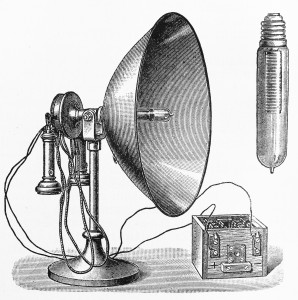 There were many key influences that helped the radio evolve into what it is today. We’ve already talked about how originally the radio was used only in simplex mode, and messages were simply transmitted via Morse Code, to recipients. There was no
 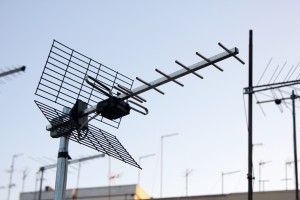 When using two-way radios, signals are typically transmitted via VHF (30 MHz to 300 MHz) or UHF (300 MHz to 3,000 MHz) waves on the radio spectrum. There are pros and cons to each. In some instances it is better to use radios set to the VHF frequencies, and in others the UHF frequencies. In addition to
 In the two-way radio world, there are two types of radios you can buy: analog and digital. Even though most would think that like cell phones, digital is the way to go, both have their pros and cons. What to buy depends on a number of different factors. Before you can decide which radio fits into your lifestyle or work place, let’s see what makes them different.